
Mice in the Walls? How to Tell, and How to Get Them Out (GTA Guide)
Scratching in your walls at night? Learn the signs of mice, how they get in, and how GTA pros remove them for good. Book a free inspection today.

Mice in the Walls? How to Tell, and How to Get Them Out (GTA Guide)
If you hear scratching or scurrying inside your walls or ceiling at night, and it started when the weather turned cold, you almost certainly have mice. The fastest fix is to confirm the signs, trap the mice that are inside, and seal the gaps they used to get in. Poison alone rarely solves it, and mice that die inside a wall can leave a smell that lasts for weeks.
Here's how to tell what's in your walls, how mice get into GTA homes, and what actually gets them out. If you'd rather hand it to a pro, see our rodent removal service.
Do You Have Mice in Your Walls? 6 Signs to Check
Health Canada lists scratching in the walls at night, gnawing, damaged food packages, droppings, urine, and tracks on dusty surfaces as the classic signs (Health Canada). In GTA homes, we see them in this order:
- Sounds after dark. Light scratching, scurrying or chewing behind drywall, usually between dusk and early morning.
- Droppings. Black, about the size of a grain of rice. Bean-sized droppings point to rats instead (Durham Region Health). Check under the sink, behind the stove and fridge, and along basement walls.
- Grease marks. Dark smudges along baseboards or around small holes, left by fur on regular routes.
- Chewed food packages. Cereal boxes, pet food bags and pantry items with small tears or holes.
- Nesting material. Shredded paper, insulation or fabric in drawers, attics or behind appliances.
- A musky smell. A stale, ammonia-like odour in closed cupboards or the basement points to a growing population.
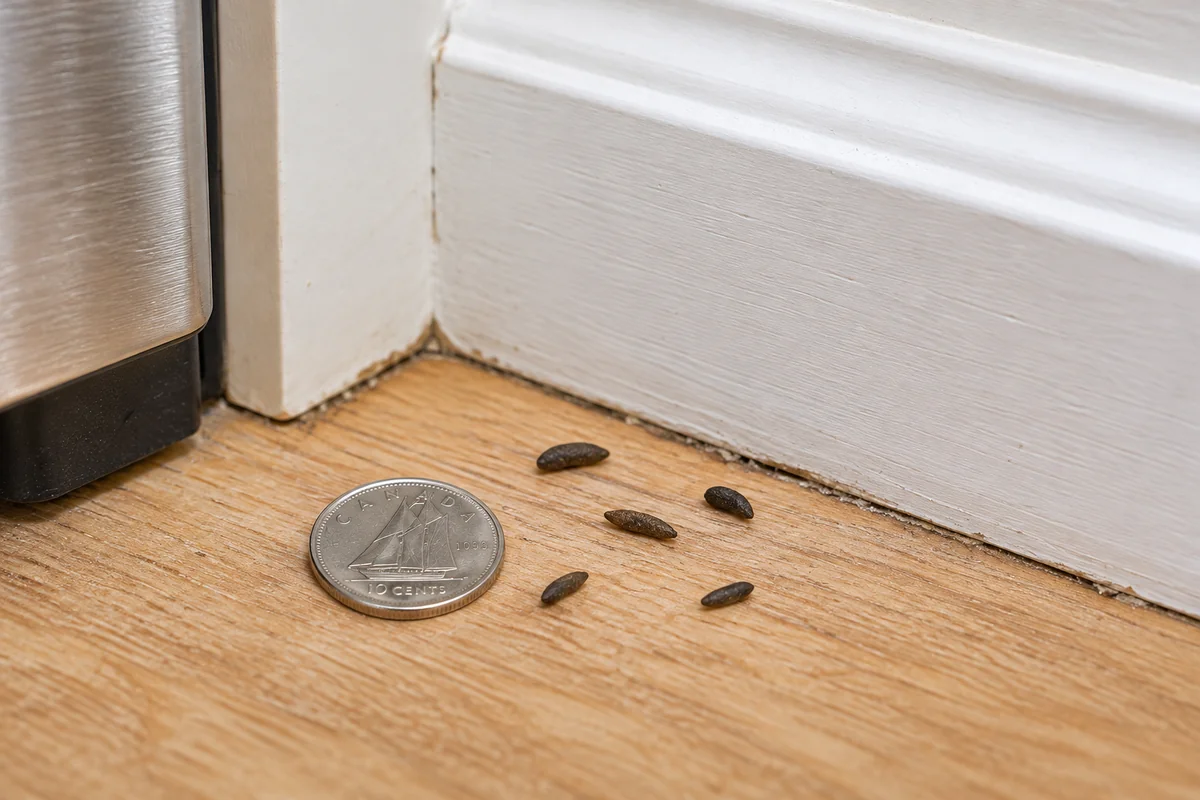
If you see two or more of these, treat it as an active infestation, not a one-off visitor.
What Do Mice in the Walls Sound Like?
Mice sound light and quick: soft scratching, tiny footsteps running up and down inside the wall, and short bursts of chewing. House mice are mostly active at night (Animal Diversity Web), so you'll usually hear them after you turn the lights off, often in the walls beside the kitchen, the bathroom or the furnace room.
Other animals make different noises. Use this as a rule of thumb before you call anyone:
| What you hear | When | Most likely |
|---|---|---|
| Light scratching and quick scurrying inside walls or between floors | Night | Mice |
| Louder gnawing and heavier movement, often low in the house or basement | Night | Rats |
| Running and rolling sounds in the attic or roof edge | Early morning and late afternoon | Squirrels |
| Heavy thumps and walking in the attic | Late night | Raccoons |
If the sounds are in the attic during the day, it's probably not mice. Squirrels and raccoons need a wildlife removal service rather than a mouse treatment.
How Do Mice Get Into GTA Homes?
Mice can squeeze through a crack about the size of a dime, roughly 6 mm (¼ inch) (Health Canada; Government of B.C.). Once the nights drop below freezing, they follow warm air and food smells to any gap that size. The entry points we find most often across Toronto, York, Peel and Durham:
- Gaps where pipes, gas lines and cables enter the house, especially behind the furnace, water heater and laundry room.
- Garage doors and the garage-to-house wall, common in Brampton, Vaughan and Markham homes with attached garages.
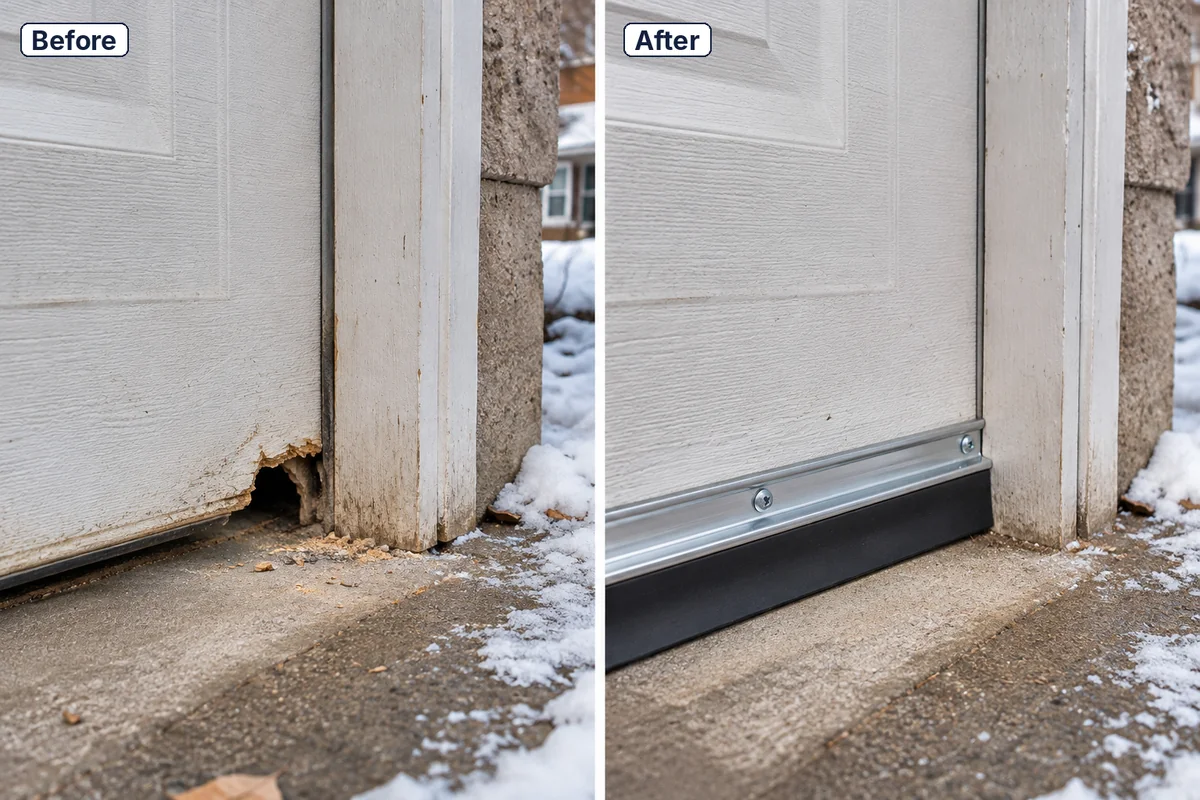
- Worn door sweeps and thresholds on side and basement doors.
- Dryer, attic and soffit vents without fine metal mesh.
- Foundation cracks and old mortar in older Toronto semis and bungalows.
- Shared walls and service chases in townhouses, condos and semi-detached homes, where mice move from one unit to the next.
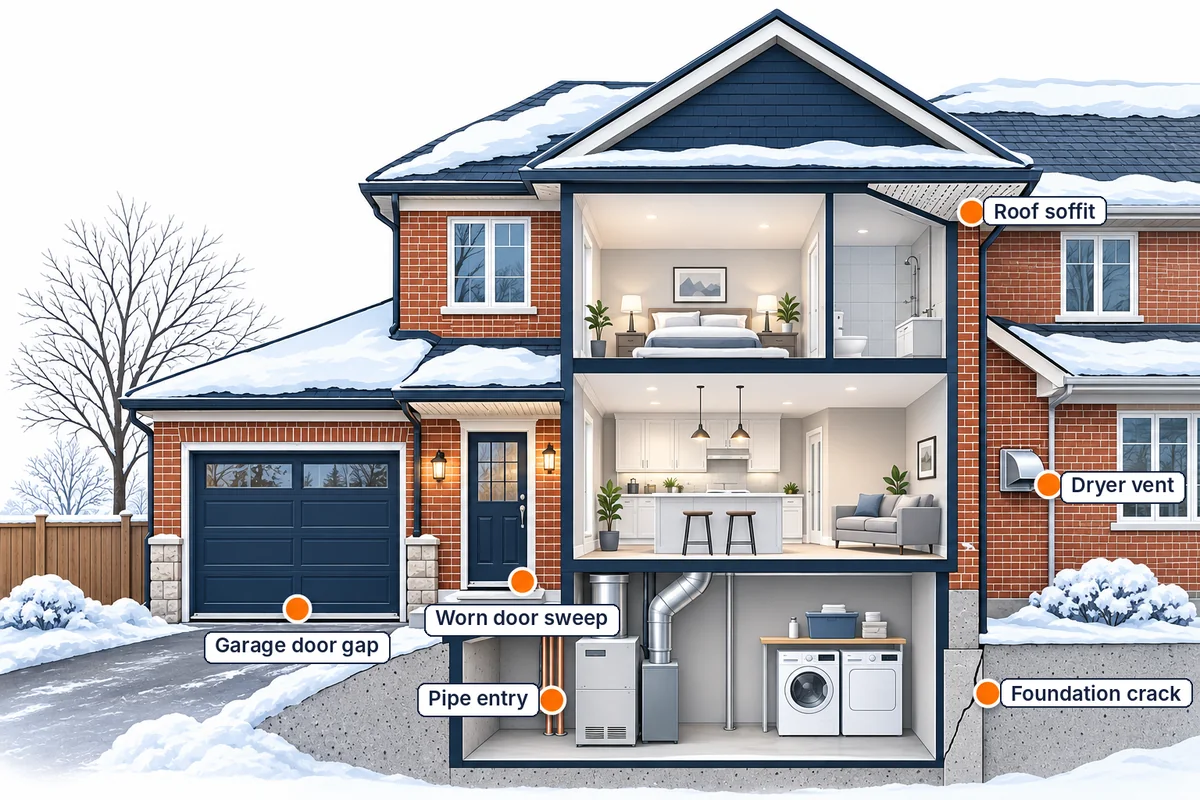
Why fast action matters. A female house mouse can have 5 to 10 litters a year, usually 5 or 6 pups each. Pregnancy lasts about 19 to 21 days, and young mice can breed at 5 to 7 weeks old (Animal Diversity Web). Indoors, with heat and food all winter, two mice in November can become a colony by spring.
How to Get Rid of Mice in Walls: What Works and What Doesn't
You can't reach mice inside a wall, so the goal is to catch them where they come out and close the doors behind them. These steps work for a small, new problem:
- Find where they come out. Look for droppings, grease marks and gaps around pipes under sinks, behind appliances and along basement walls.
- Set snap traps along those routes. Place them against the wall, trigger end facing the wall, baited with a little peanut butter. Use several traps, not one, and check them every day. Health Canada notes that snap, electronic and live traps all work when set correctly (Health Canada).
- Remove food and water. Store pantry food and pet food in sealed containers, wipe up crumbs and fix dripping taps.
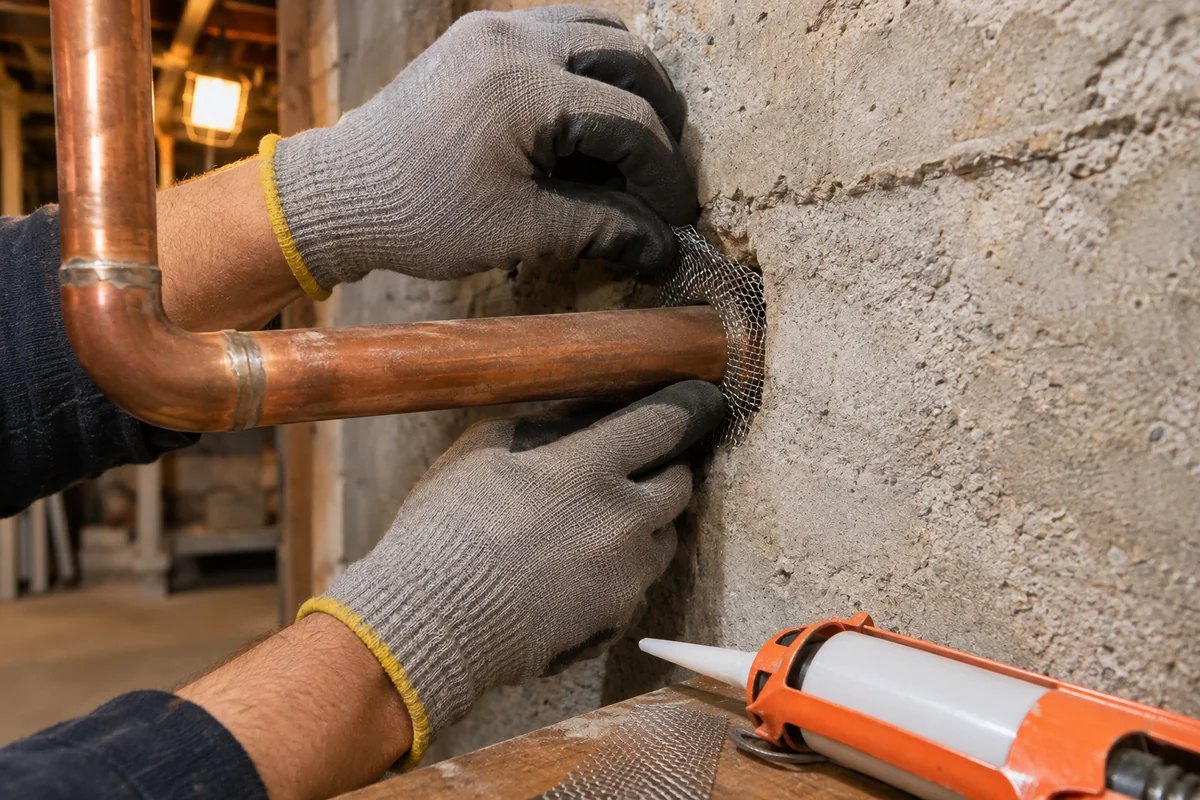
- Seal the gaps. Pack steel wool around pipes before sealing, add metal weather stripping under doors, and cover vents with fine metal mesh. Expanding foam on its own gets chewed through.
- Clean up safely. Wear gloves and a mask, dampen droppings with a bleach solution before wiping, and never sweep or vacuum them dry.
What doesn't work well
- Poison on its own. Health Canada says baits should never be the only method. Poisoned mice often die inside the wall, which means a strong smell and sometimes cutting open drywall to remove them. Baits also need tamper-proof stations anywhere children or pets can reach.
- Ultrasonic plug-ins. Mice can get used to them and come back, so they're an extra, not a fix.
- Sealing holes before the mice are gone. You trap them inside the wall, where they chew new holes or die out of reach. Trap first, then seal.
- Peppermint oil and dryer sheets. They may cover a smell, but they don't stop mice from coming in.
When to call a professional: you've trapped mice for two weeks and still hear them, you find droppings on more than one floor, you share walls with neighbours, or you have a smell you can't locate.
How ZeroBugZone Gets Mice Out of Your Walls
Our rodent removal works in four steps, so the mice inside are removed and new ones can't follow them in.
- Free inspection. A technician checks the outside of the house, the garage, the basement and the rooms where you hear noise. We find the entry points and the routes the mice use inside the walls.
- Targeted trapping and secured bait stations. Traps go along active routes. Any bait goes into locked, tamper-proof stations placed away from children and pets.
- Sealing entry points. We close the gaps with rodent-proof materials such as steel mesh and metal flashing, not foam alone.
- Follow-up and prevention. We come back to check activity, remove traps, and give you a short list of what to keep closed and stored.
We offer same-day visits across Toronto, North York, Scarborough, Mississauga, Brampton, Vaughan, Richmond Hill, Oakville and the rest of the GTA.
How Much Does It Cost to Get Mice Out of Walls in Toronto?
HomeStars' 2026 guide puts a typical mouse exterminator job at $450 to $650 in Toronto, compared with $300 to $400 for the same work in a mid-sized Canadian city (HomeStars). The price depends on how many entry points need sealing, how many floors have activity, and how many follow-up visits are needed. Many companies charge $75 to $250 just to inspect (HomeStars); ZeroBugZone's inspection is free, and you'll know the price before any work starts.
Frequently Asked Questions
Will mice in the walls leave on their own?
Not in winter. Your walls give them heat, shelter and nearby food, and they breed all year indoors.
Can mice damage my house?
Yes. Rodents chew insulation and wallboard, and gnawing on wiring can start electrical fires (Government of B.C.).
Are mice in the walls a health risk?
Their urine and droppings can spread disease, and dust from dry droppings can make you sick, so clean up with gloves, a mask and a damp bleach solution (Health Canada).
How long does it take to get rid of mice in walls?
A small problem caught early usually clears in a few weeks once trapping and sealing are done together. Larger or multi-floor infestations take longer and need follow-up visits.
There's a dead mouse smell in my wall. What do I do?
The smell usually fades as the body dries out, but it can last weeks. If it's strong or near a living space, a technician can locate it and remove it through a small access hole.
Hearing Scratching in Your Walls Tonight?
Don't wait for the colony to grow over the winter. Book a free rodent inspection and a ZeroBugZone technician will find how the mice are getting in, remove them, and seal the gaps, with same-day visits across the GTA.
Call (437) 870-0091 or book your free inspection online.
Related reading: How to Keep Rodents Out of Your House This Winter · Winter Pest Survival: How Rodents Stay Warm Inside Toronto Homes · Top 7 Places Pests Hide That You're Probably Missing


