


Aprehend vs. Heat Treatment for Bed Bugs: Which Is Best for Ontario Homes?
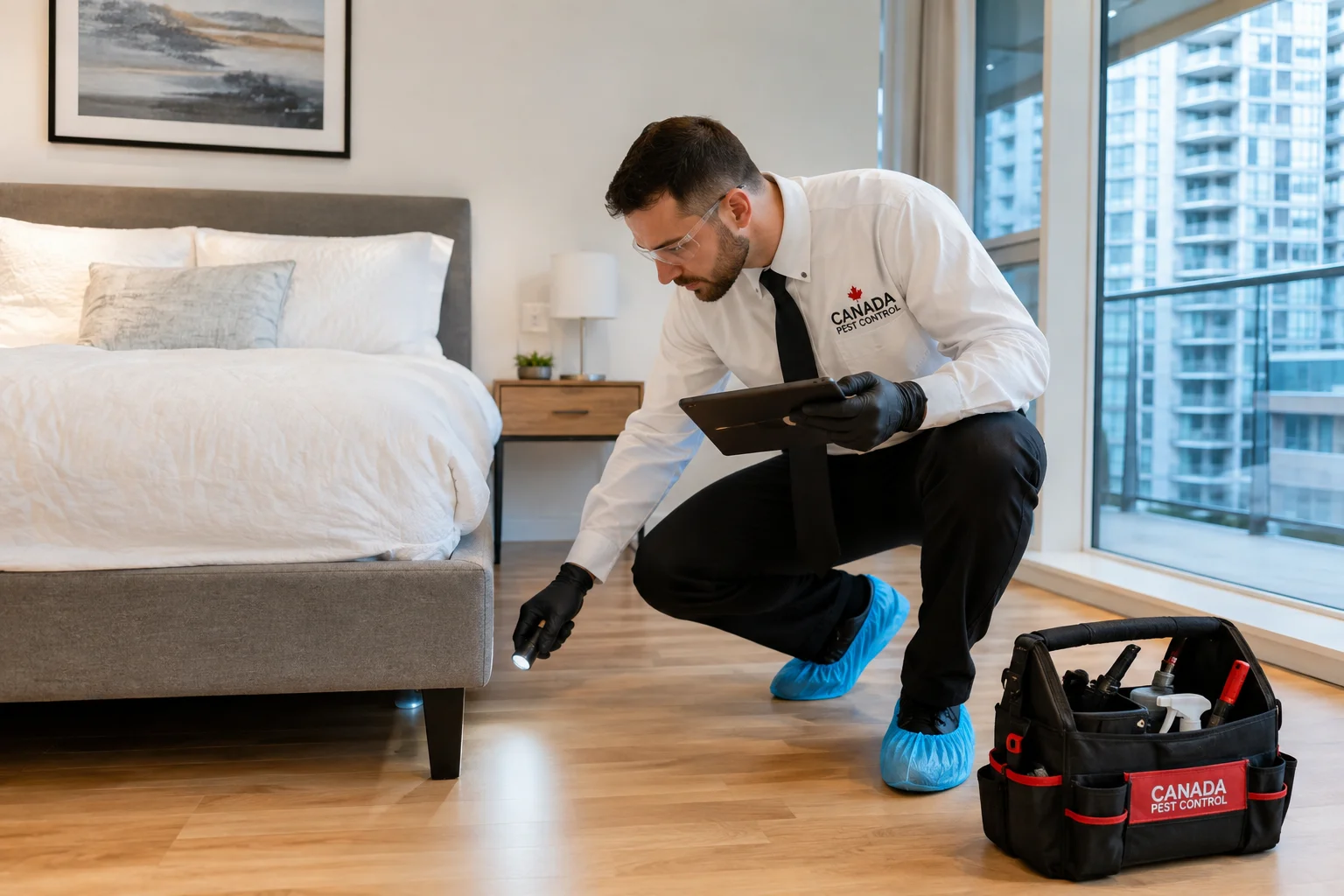
Aprehend vs. Heat Treatment for Bed Bugs: Which Is Best for Ontario Homes?
Few household problems trigger panic quite like discovering bed bugs. One morning you notice a row of itchy bites, then a small dark spot on the mattress seam, and suddenly you're inspecting every crevice at 2 a.m. In busy GTA apartment buildings and family homes across Toronto, Richmond Hill, and beyond, bed bugs spread quickly through shared walls, furniture, and luggage, turning a single unit's problem into a building-wide headache.
The instinct is to rush to the hardware store for a can of spray. Unfortunately, store-bought products almost always fail. Most bed bugs in Ontario have developed resistance to the pyrethroid chemicals found in retail sprays, and those products only kill what they directly touch. Bed bugs hide deep inside box springs, baseboards, and wall voids where a consumer aerosol never reaches. You might knock down a few visible bugs while the colony survives and rebounds, often stronger and more scattered than before.
Professional treatment is the reliable path forward, and two options dominate the conversation: Aprehend, a biological (fungal) treatment, and thermal heat treatment. Both are highly effective in the right situation, but they work in completely different ways. This guide breaks down both so homeowners, landlords, and property managers can make a confident, informed decision.
What Is Aprehend® Bed Bug Treatment?
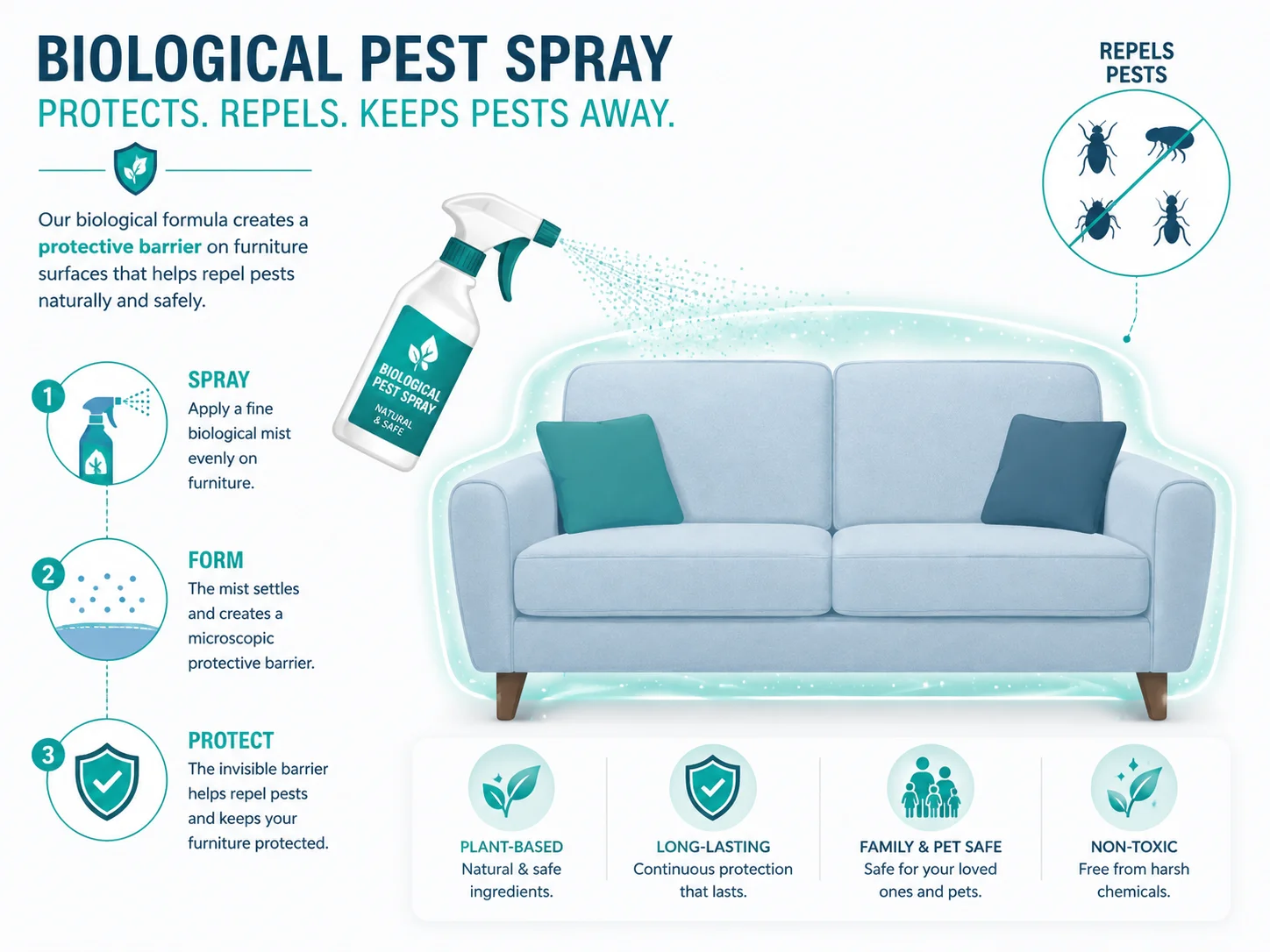
Aprehend is a fungal biopesticide, a genuinely different approach from traditional chemical sprays. Its active ingredient is Beauveria bassiana, a naturally occurring fungus suspended in an oil-based formulation. Rather than trying to soak every bed bug directly, a licensed technician sprays thin barrier lines of Aprehend in the pathways bed bugs travel between their hiding spots and their human hosts, typically around the bed frame, baseboards, and furniture legs.
Here's where the science gets clever. When a bed bug walks across a treated barrier, the microscopic fungal spores cling to its body. The bug then carries those spores back to its harborage, the hidden cracks and crevices where the colony clusters. Through direct contact, the spores transfer to other bed bugs, including ones that never crossed the treated line themselves. The spores germinate on the insect's cuticle, the infection takes hold, and infected bed bugs typically die within four to ten days. This "carry-back" effect means Aprehend can reach bugs deep in their nest without the technician ever having to find them.
The other major advantage is residual protection. A single Aprehend application remains active on surfaces for up to three months, so any bed bug that emerges later, including newly hatched nymphs, still encounters a lethal barrier. This long residual makes Aprehend bed bug treatment in Ontario particularly valuable in apartments and condos, where re-introduction from a neighbouring unit is a constant risk. Because the fungus is naturally occurring and applied in targeted barriers, it's a low-toxicity option that's considered safe for use in occupied homes when applied by a professional according to label directions.
The trade-off is speed. Aprehend is not an overnight fix. It works over days as spores spread and infections develop, so it rewards patience and is often deployed as part of an integrated plan rather than a single dramatic event.
What Is Thermal Heat Treatment for Bed Bugs?
Thermal heat treatment attacks the problem from the opposite direction: instead of a slow biological process, it uses raw temperature to kill every bed bug in a space in a single visit. Bed bugs and their eggs cannot survive sustained heat. The thermal death point sits around 118°F (48°C) for adults and nymphs, while eggs are tougher and require higher, sustained temperatures to guarantee 100% mortality.
During a professional heat treatment, technicians bring industrial electric heaters and high-powered fans into the home and raise the ambient air temperature of the treatment area to roughly 120–135°F (49–57°C). The fans are just as important as the heaters: they push hot air into cracks, crevices, wall-floor junctions, and furniture interiors where bed bugs hide, eliminating the cool pockets where bugs could otherwise survive. Trained technicians place remote temperature sensors throughout the space and continuously monitor readings, moving heaters, redirecting fans, and shifting contents so that even the hardest-to-reach spots reach lethal temperature and hold it long enough to work. A typical treatment runs several hours, often six to eight, depending on the size and contents of the space.
The biggest selling point of heat is that it kills all life stages, from eggs to adults, in one session, with no chemical residue left behind. The biggest limitation is that heat offers no lasting protection. The moment the room cools, any bed bug that wanders in afterward, from an adjacent apartment, a returning piece of luggage, or an untreated area, faces no barrier at all.
Heat treatment also demands significant preparation. Heat-sensitive items must be removed beforehand, including aerosol cans, pressurized containers, candles, certain electronics, medications, houseplants, and items that can melt or warp. Proper prep is essential both for safety and for allowing hot air to circulate freely.
Aprehend vs. Heat Treatment: Key Differences
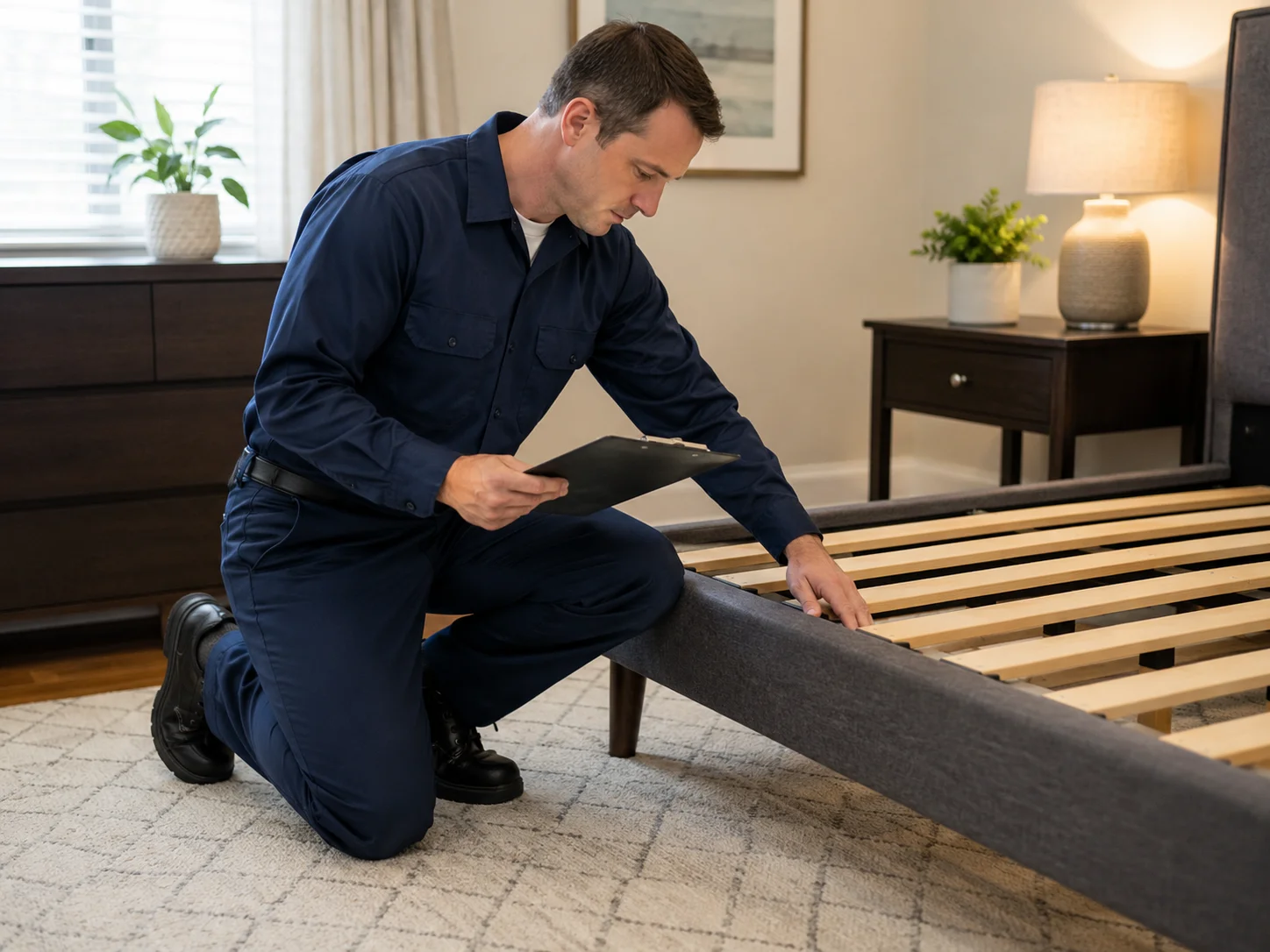
Both methods eliminate bed bugs, but they suit different budgets, properties, and situations. When homeowners weigh heat treatment vs. chemical bed bug options, it helps to remember that Aprehend is technically a biological treatment, not a conventional chemical spray, so it sidesteps the resistance problems that make retail chemicals fail. Here's a side-by-side comparison.
Which Treatment Should You Choose for Your GTA Property?
The right choice depends on your budget, how cluttered the space is, and whether you're dealing with a single home or a multi-unit building. As a professional bed bug removal service across the GTA, we help clients weigh these factors every day.
If budget is a priority, Aprehend is usually the more affordable route. It requires less equipment and labour than mobilizing industrial heaters and a crew for a full day, making it attractive for landlords managing costs across multiple units or homeowners on a tighter budget.
If clutter is high, Aprehend again has an edge. Heat treatment demands extensive preparation and free airflow, and heavily cluttered rooms create cold pockets where bugs survive, undermining results. Aprehend's targeted barriers are more forgiving of a lived-in, busy home, though reducing clutter always improves any treatment.
If you want the fastest possible knockdown and can complete the prep, heat treatment is hard to beat. It wipes out every life stage in a single visit, which is appealing when a bedroom needs to be usable again quickly or when an infestation is severe and well-established.
For single-family homes, either method works well. Homeowners who want a one-and-done solution and can handle the prep often lean toward heat, while those who value lingering protection and lower cost choose Aprehend.
For apartments, condos, and multi-unit buildings, Aprehend's residual barrier is a major advantage. In connected buildings across Toronto and Richmond Hill, bed bugs travel between units through walls and shared spaces, so a treatment that keeps protecting for months guards against re-introduction from a neighbour. In practice, many of the toughest infestations are best solved by combining approaches: a heat treatment for immediate elimination followed by an Aprehend barrier to prevent survivors and re-entry from taking hold. A licensed bed bug exterminator in Toronto can assess your specific situation and recommend the smartest combination.
Frequently Asked Questions
Is Aprehend safe to use in an occupied home with kids and pets?
Yes. Aprehend uses Beauveria bassiana, a naturally occurring fungus, applied in targeted barrier lines rather than broadcast across living surfaces. When applied by a licensed professional according to label directions, it's considered a low-toxicity option suitable for occupied homes. Your technician will advise on any short drying time and where to avoid disturbing the treated barriers.
How long does it take to get rid of bed bugs with each method?
Heat treatment kills bed bugs at all life stages during a single session, typically lasting six to eight hours. Aprehend works more gradually, with exposed bed bugs dying within four to ten days as the fungal infection spreads through the colony, while continuing to protect the home for up to three months.
Does heat treatment prevent bed bugs from coming back?
No. Heat treatment eliminates the bed bugs present at the time of service, but it leaves no residual protection once the room cools. Any bed bugs reintroduced afterward, from a neighbouring unit, luggage, or used furniture, can start a new infestation. This is why many GTA properties pair heat with an Aprehend barrier for lasting defence.
Conclusion
There's no single "best" bed bug treatment for every Ontario home, only the best treatment for your specific property, budget, and infestation. Aprehend offers affordability, minimal prep, and months of residual protection that's ideal for apartments and condos. Heat treatment delivers fast, single-visit elimination of every life stage for those who want immediate results and can handle the preparation. For many homes, the strongest strategy combines both.
The most important step is acting quickly and calling a licensed professional before a small problem becomes a building-wide one. At ZeroBugZone pest control, our licensed exterminators serve Richmond Hill, Toronto, and the entire GTA with proven, tailored bed bug solutions, whether that's Aprehend, heat, or an integrated plan built around your home.
Don't lose another night's sleep. Contact ZeroBugZone today to request your free bed bug inspection, and let our licensed team recommend the right treatment for your property.


